Sunday, November 20, 2022

SCUBA Danger - Seriously Tanked

 Treasure diving had always held my fascination since I was a kid. Mike Nelson and his flaming magnesium underwater torch was the coolest; finding treasure, beautiful women, and still fight the bad guys deep in the depths! Luckily, my father was an avid diver, making his own gear before most of it was available commercially. Made his own wetsuit, bought a dual-tank set-up and he was off. I made the mistake once, during elementary school, when we were planning a bring your father to class event, of telling them my father was a scuba diver. This was like in 1960, when diving was not all that common. 

When Dad brought his tanks and gear in the day of our class, unknown to me, the subject was so interesting the teachers at the entire school got together and made it an all-school event in the school auditorium! Dad was expecting a short talk in a 20-student classroom, but instead found himself staring down a 650 sized student body, along with 20 or 30 teachers! I can still remember him, in his blue business suit, hefting the tanks on his back and the mask on his face while he explained in detail the use of all the gear. You would have thought he was a celebrated astronaut, and this was before astronauts! Afterward he was surrounded by interested teachers asking further questions. 

I thought he was going to kill me when I got home, and I was ready to explain that I had no idea they were going to do that, but he was still basking in the adulation of the 650-plus audience, so I escaped wrath of any kind. I was also the one tasked with bringing over 650 "thank you" notes home for him to read. One was mine. It read "Thanks Dad!" which my teacher chewed me out about, saying I showed no creativity in the note. I listened to all this and thought "Jeez, I see him every day, and I am still apologizing for what you and your ilk did without my knowledge!

Dad ended up teaching me to dive and also enrolled me in a NAUI scuba class at 14. I finally got my dive card, but not until NAUI had tortured me a few times diving in zero visibility water, tasked to navigate underwater with a compass, and how to change tanks underwater, or remove them completely. That last maneuver actually saved my life once, while I was doing an underwater hull-cleaning on a large yacht parked up against a seawall. 

I had gone under the boat and come up on the seawall side. I started cleaning the hull and was not particularly being very observant, when I suddenly noticed the tide was going out and the boat was settling on me. There was a slight concrete lip at the bottom of the seawall, not very wide, but my escape was blocked by this, and the curve of the hull was closing my escape upward to the surface. There was a large post at either end, near the bow and the stern so I could not get out that way. My tanks would never fit, and neither would I with or without the tanks! I suddenly realized I was going to drown.

trapped underwater in a confined space

 
My route back down under the boat was just barely wide enough for me to get through without the tanks. To make matters worse, passing boat traffic was making the hull ride up and down, creating sort of a continuous guillotine effect between the hull and concrete ledge. I'd have to time this well or be cut in half by a 25-ton boat! Either drown or be crushed. In the confined area I was in, I still managed to remember my NAUI training, and get the tanks and BC off, still breathing off the regulator. I braced my flippered feet against the seawall behind me, watched the hull coming up past the ledge, held my breath and PUSHED! I shot down between the yacht and the ledge and seemingly forever, surfaced on the other side.

My other buddies who had been working on the other side were astounded when I told them what had happened. I later showed them what had turned out to be a confined space, that none of us had recognized as such. You couldn't even call for help, because you could not surface by that time. Once again science, technology, training, keeping a cool head and working the problem saved me from certain death. Probably in a parallel universe I wasn't that lucky.

Monday, November 7, 2022

Pinpointing Targets - The million-mile stare

 One of the most difficult skills to master in metal detecting is accurately targeting signals under the coil. Some of this is due more to the lousy targeting abilities of less costly detectors, than the operator, Now, with small, handheld pulse detectors, many just assume digging a 12" wide, pizza-sized hole will suffice. Then waving the small electronic magic wand over the area, it will quickly and easily locate the target. We quickly remove and marvel at the gold coin we just pinpointed, then head for home. It's Miller time! No, sorry, just no. 

Pinpointing a target with a VLF metal detector is dependent on two things, well really one thing, the search coil, but in two flavors; concentric or the wide-scan (also known as a double-D) coil. When you find a likely target you would like to dig, with a concentric coil, you swing the coil back and forth above the target until the signal is either the loudest or the highest tone, or both, the detected target location will usually be, visually, at the center of the concentric coil. Usually I look for an item at the target point under the coil...a leaf, a small stone, twig...and stare at it as you swing the coil away ("The Million-Mile Stare") and you prepare to dig. When I first started out detecting, my technique after locating the target center in the concentric coil, I would do "the-million-mile-stare" at that location, swing the coil away, and push a coin-probe in the target center. It worked well as a visual-aid when digging, until I got the technique down pat. 

concentric target center on the left is usually where the red x is indicated
wide-scan (double-d) target center in green X is punching the "pinpoint control
Wide-scan (double-d) target locations red X front and back using "wiggle" method

You will find more expensive detectors will come with a wide-scan or "double-d" coil that pinpoints somewhat differently, When I switched from a concentric coil to a wide-scan coil, I found it somewhat difficult to pinpoint very well with the double-d, and had a few choice words with the %$#!&%$!& thing while out hunting the beach!  Metal detector manufacturers, thanks to computerization, have electronically "forced" the circuits to simulate a pinpointed target physically at the center of the double-d coil. And there is nothing wrong with this, as machines using the double-d coil get more technically advanced, pinpointing gets more accurate. BUT, and its a big BUT, understanding and using this coil to best advantage means using it as it was designed. I don't want to launch into another explanation on coils and how they work, just how they pin-point.


The solid strip down the center of the coil is called "the hot-shoe" on a double-d. When you are pinpointing a target, you don't have to use (although you can) the "pinpoint" button, but use a technique called the "wiggle" method. Upon gaining a target, in any mode you choose, you narrowly wiggle the coil back and forth while moving forward slowly, maintaining the target signal. When the target signal suddenly drops off, the target is directly behind the back edge of the coil. And this ability is what make water hunting possible with this type coil. Hunting in chest-deep muddy water? Can't see the coil? Use this technique, and once target is pinpointed, put your toe touching the back of the coil, swing the coil away, then move your toe back a few inches, put the long-handled beach scoop at a 45 degree angle just in front of your toe and dig, Chances are good you will dig the target on the first try, and you never even saw the bottom, you did it all by practice and feel. Don't try this with a concentric coil, though.

Another method in detector pinpointing techniques, using either type coil, is called "de-tuning," which increases the physical accuracy of the coil. As you swing over the target, as soon as you swing slightly away from the target center, punch the pinpoint button off and then punch it back on, and keep swinging, narrowing your sweep each time you de-tune. It takes some practice, but you will be making surgical recoveries of targets as your skills improve.

Still another technique we used back in the day, before electronic hand-held pinpointing devices were available, and still useful today if you cannot yet afford a pin-pointer, we called poor man's pinpointing. The fact was we were not poor, we were just underequipped. You managed to isolate the target using the detector's pinpointing feature, but the target is small, and hard to see or feel in dirt of the hole you dug, especially if you were wearing gloves. Frustrating though it is, the fact that a search coil, no matter what the type, will detect on both sides of the coil saves the day! Grab a handful of dirt from the dig and wave it over the top of your search coil until one handful sounds off, then poke carefully through the dirt in your palm until the target is located. It's Miller Time!

The really important aspect of all this, to you, and the hobby in general, is to master pinpointing, so you can excavate detected targets with surgical precision, and leave the 12" wide digs to the prairie dogs, keeping our hobby safe for coming generations.


Sunday, September 4, 2022

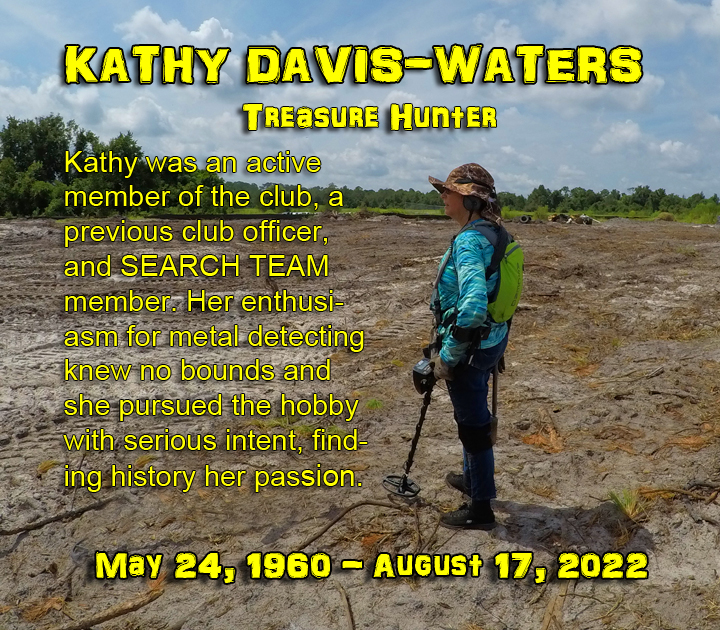
Kathy Davis-Waters - Goodby to A Friend

Kathy Davis-Waters was a friend of mine, and a member of the CFMDC since 2014, and had an active hand in the club and its activities, having been a club officer (vice-president), and a member of the club within the club, hunting police evidence, with the CFMDC Search Team. Cancer took her in mid-August, something we all knew was coming, including her. We were all hoping that, like in a TV show, there would be some last-minute plot twist that would erase the evil disease and bring her back to us in full health again, smiling and joking, doing her best to enjoy continuing life and her joy of God, friends, and metal detecting. Alas, it was not to be, and we sadly bid our friend goodby on the morning of August 17th 2022 where she passed peacefully into the arms of our Lord. 

Kathy Davis-Waters Treasure Hunter


Kathy Holding An Air Inlet Door from a WWII Grumman TBM Bomber

Kathy spent as much time as she could on small metal-detecting expeditions with all members of the group, and was an ardent detectorist. Her love of history always shown through with her various finds, and her excitement was palpable every time. One of her most spectacular recoveries, in my opinion, was a 1916 brass tire gauge that still showed signs of being serviceable over 100 years later! Unfortunately we had agreed to turn over all artifacts to the property owners after the hunt and she had to let her precious find go, a part of being in the hobby, but not particularly liking it. 

Kathy being Kathy...getting the "Kathy" stare 

 She was a master of many trades; she had been a Disney World photographer for many years, a private wedding photographer (her stories were priceless!) worked as a Uber and Lyft driver, but being a photographer was foremost. The other was detectorist. 

Kathy asking the farm owner where he thinks the $4000 diamond-studded cross might be

Kathy took part in many of the CFMDC Search Team's evidence hunts, lending a hand to put dangerous criminals where they belonged, behind bars or worse. She served as club Vice-President for one term, doing her best through cancer treatments to assist and support the club and the people in it. 

Proudly Displaying A Spoon Found On An Airbase Hunt

Kathy was a treasure hunter, and a good one. She originally used a Garrett AT-Pro, which she thoroughly wore out, upgrading to a Minelab CTX 3030. I hunted with her on many occasions and we always had a good time. Finding things was usually secondary to the fun we were all having!

Kathy (far left) my wife Patti, Me, and Mary hunting a Florida Park

We will all be missing Kathy's smile, her pranks (like yelling "GoPro STOP recording!" as she walked by) and her friendship, as she can never be replaced in our hearts. Rest in peace, Kathy.


Tuesday, June 28, 2022

Rewarding Hobby-Dealing With Gratitude

 Something I've noticed for many years now, is the conclusion to a successful lost ring, lost jewelry, lost necklace, pendant, and so on hunt is the happiness of the person who thought they would never see this item again. Hand over open mouth, jumping up and down, heartfelt hugs and the plethora of body language with verbal exclamations that go with the realization that your electronic magic wand has turned an unfathomed loss, into an unbelievable reunion! Here, at this point, is where the rubber meets the road. The person, or couple, or family holds out their hand with a wad of bills...maybe $20 or can go as high as $1000 at times and everywhere in between. The sudden quiet is deafening, the birds are frozen in flight, the world has momentarily stopped turning.

My Wife Returning A Lost Wedding Band

As part of our prime directive, our detectorist mantra, we never ask for a reward, but if one is offered? You, of course, are above all that, and your benevolence shines with a nuclear radiance...sometimes blinding you to the situation as it really stands. "No, no. I was glad to find it...that's what we/I do as a service...no, no...!" Let me say this about that: there is nothing wrong with being magnanimous, especially when you consider the time it took you to find it, or the magnitude of the recovery. BUT when it was truly a herculean effort, say in a dirty muddy scummy side canal, or alligator infested pond, or several days of pounding the ground, the atmosphere changes. Your equipment is specialized and expensive, the experience and proficiency in using that equipment is a hard-to-find commodity and traveling to the site is getting more and more expensive. Yes, yes, you have a great retirement nest-egg, yes everyone admires your charity and holds you as a hero, and it may well be deserved, as I have seen time and again, detectorists selflessly even put themselves in danger to recover and unrecoverable heirloom. But I'm talking about not a physical daring-do, but the mental state of the person who experienced the loss then the miraculous recovery. They really want to reward you...they really do! No one wants to live in the shadow of debt of another, and they would like to see you have a nice dinner out, or a movie as a token of their thanks for what you did.

So, as they hold a reward in their outstretched hand, I would advise you to thank them profusely and take it! Let me explain, especially to those of you that are mentally accusing me of being a detection hooker!  Although it is not really quid pro quo, it comes close. They go away happy for the return of the unreturnable, and you go away happy, maybe going to dinner and see Maverick with your wife on their dime tonight. Or not...just consider it.


Monday, June 6, 2022

Pyrate Tyme - The Real Deal

 One question...why do many metal detecting club's logo's feature a pirate ship, face, or flag? Pirates, or Privateers as they were originally called, were not nice people. They were dangerous seagoing criminal gangs that literally robbed, raped, and plundered ships and coastal villages. What does that have to do with the metal detecting hobby? Since Captain Jack Sparrow graced the big screen many years ago, that loveable rouge, funny, most times drunk, and highly humorous, we have gotten a very biased opinion of pirates. As a matter of fact, most everyone who lived quite a bit after these seagoing gangs were caught and hanged, or jailed, has a slanted view of these guys. 

First of all pirates rarely, if ever, buried their treasure. They didn't have time to do so, always on the run, dodging Navel patrols or angry shipping companies. And usually after a few nights of drunken carousing in a safe port, they had little treasure left anyway. They were a "live for today" crowd, and many didn't expect to even see tomorrow. Being a common sailor in a 16th Century navy was a horror; beaten, worked to death, or executed for minor offences. Many men were "shanghaied" or basically knocked cold and brought aboard ship, and when they woke up at sea, they had no choice but to work as part of the crew. One pirate was recorded as saying "In an honest service there is thin commons, low wages and hard labor. In piracy, there is plenty and satiety, pleasure and ease, liberty and power; and who would not balance creditor, when all the hazard that is run for it, at worst, is only a sour look or two  at hanging?" He ended the thought with " No, a merry life and a short one shall be my motto!"
Several of my favorite Pirate reads
Being part of a pirate crew was, strange as it sounds, freedom in a democratic society. Pirate crews would elect their own captains, if the captain did not work out, or caused the group problems the pirate crew was more than quick in replacing him immediately! They voted on what prize (ship) t take in battle to gain the most treasure with the least amount of harm to themselves. And their take was not always gold and silver, it was also rum, alcohol, booze, fine silks and linen cloth...and occasionally women. A hostage meant money in the bank. Anything they could turn a profit on. Many governors in the colonies and Caribbean nations would have dealings with the pirates, buying what they stole at reduced prices and reselling them in their sphere of influence. Kind of a 16th Century E-Bay, but without the return policy...or the hassles! Another fallacy is pirates regularly made people "...walk the plank!" There was no plank, until several books, and later movies, poured that into the mystery mix that were pirate societies. A lot of the fabricated bunk about pirates originally came from a 1724 publication called "A General History of the Robberies and Murders of the Most Notorious Pyrates" This made a lot of money for the author, but it was equivalent to our reality television, looks good, but it really is not real! I've read several books on pirates that were very good, including a book years ago I managed to get, an original 1619 copy of "Pyrates Of The Caribbean," which I stupidly loaned to an acquaintance, and never saw the book again! If you get a chance, read up on piracy...a fascinating subject!  


Wednesday, May 4, 2022

Time Over Target - Relaxing Detecting

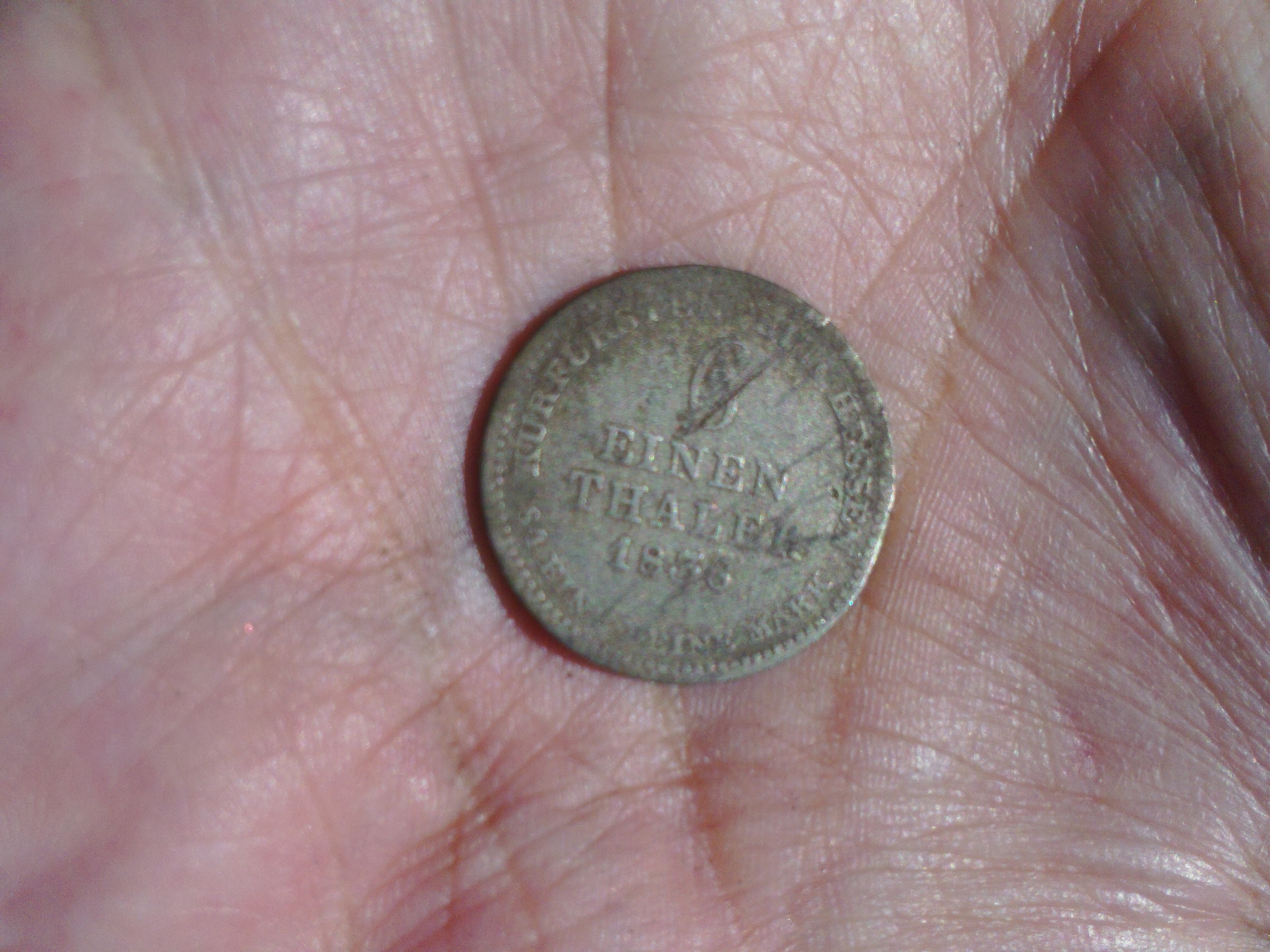
 Metal detecting targets here in Florida are usually found in distinct layers, in accordance with the age of the item; older targets are usually deeper than newer targets. But not always, this is just an example. (we will use coins as the standard target, as most metal detectors are usually designed with coins in mind) Let's say targets from recently lost coins to those dropped a decade ago  can usually be found in regular soil from 1" to around 5" deep. We will call this the first layer. The second layer, coins lost 25 to 50 years ago, or so, will usually be found around 6" to 8" deep, in undisturbed ground. The third layer consists of coins dropped from 75 to 200 years ago, and are found, again, in undisturbed ground, up from 9" to 15" deep or deeper.

        An 1830's Spanish coin found by a friend around 6 or 7" deep  

A lot of factors can change these estimates, such as the make-up of the matrix, or in other words, the composition of the soil. Here in Florida, we have a black loamy soil in places, which can discolor older coins quite badly, to a sand-shell matrix which is easier on coins, and is more like beach detecting in certain ways. Metal detecting older coins can be very exciting, but requires you slow down a bit and listen closely for those deep signals. Sometimes nothing much more than a whisper is heard, and with experience, you'll know the target is worth digging. Slow, deep, coin hunting is an excellent way of bringing back the fun the hobby has always been known for. And since most detectorists' are impatient, they will be racing off at flank speed looking for the shallow finds, leaving the heavy silver for you! So get out there and listen closely as you slowly race about the park and get back into the exciting world of metal detecting! 


Sunday, April 10, 2022

Detector Protector - Simple Things Keep It Running

 New detectorists usually have nowhere to turn to learn some of the basics of metal detecting. Oh sure, the old response to a question is usually "Watch YouTube, yeah Detector Dude and Dudet will show you all you need to know!" which of course can help you somewhat, but they are usually trying to make a few bucks and keeping their sponsors, more than filling you in on the basics. Most tubers assume you already know the basics.   And detector salespeople can help somewhat, but they are far more interested in selling machines then they are willing instructors to teach a rather complicated art and science to the layman. New detectorists should learn the proper ways and ethics of the hobby from the start. I'm going describe several of the basic pitfalls new detectorists get themselves into. Don't be embarrassed, we have all been there, either recently or a half-century ago. Tech advances, but human nature stays the same. 

Keep waterproofing caps on and the cable connection tight!

As I said last time, same place same channel, READ THE MANUAL, then read it again. I do, even though I have hours and hours on my machines. Many detectors nowadays can be electronically UPDATED, and characteristics may change on the same machine! Here are the very, very basic issues that can plague first time users. Erratic operation, the target signal jumps into and out of the headphones, tones increase and decrease. Possible issue is that the CONNECTOR from the coil-cable is LOOSE. Check this vital connection before every hunt, as they loosen up all the time and can be a major headache and ruin a hunt or worse a competition hunt! Another pain-in-the-neck is an improperly wrapped search-coil cable. A loose cable can cause false signals galore and make you crazy, or crazier than you normally are!

A well-wrapped coil is a happy coil...no loose windings!

Keep the coil cable wound tight but not too tight, and don't let the cable flop onto the top of the search coil! Another secret from the files of the Detectorist Guild is that the search coil detects metal from BOTH SIDES OF THE COIL and the floppy cable may, again, cause false signals due to the electrodynamic action on the metal wire in the cable.

Keep the control cable from flopping on the top of the coil!

I cannot tell you how many times an errant control-cable dragging across the top of a search-coil has caused massive digging for a target that never seemed to be there. as well as some new curse words being created at an alarming rate!  Also the obvious problem with steel-toes shoes should present itself, although it has happened, with the detectorist swearing his machine was defective! Make sure the batteries are in the machine properly, and at the proper polarity...one cell in backwards can delay or ruin a hunt! Last, but not least, as a tip for newbies, that VDI screen is filled with good info, and the more you learn what it is telling you, the more keepers you will be finding! 

Another issue is a debris-filled plastic coil-cover, or scuff-plate, designed to prevent scratches and damage to the bottom of your expensive search-coil, it can also be a source of mysterious detector problems. This is a common problem causing nothing but trouble...false signals, scratchy interference, weird audio sounds. Especially when filled with sand and salty, mineralized, water, it can drive you nuts! These covers are not the easiest things to remove and sometimes you wonder how they can collect anything inside, they fit so tightly. And if you don't remove it after every few trips, you may never be able to remove it again, it can get so encrusted with dirt and salt! Once pried off, wash it out with fresh water, wash the search coil the same way, dry them and reassemble them. It can get rid of a lot of mysterious problems in one fell swoop.

Pry off the coil cover to solve many mysterious detector problems


Wash both the coil-cover AND search-coil with fresh water.

You metal detecting device is a precision instrument, and a nice clear, unscratched and unmarred view is the best view. But hauling the machine around, in the trunk, in the boat, or your backpack it's a good idea to keep it protected and many detectors come with a cover, But a quick and effective substitute can be had with a sock of any kind, now that the digital control head of most machines with recessed controls are the norm. It keeps the screen clean and unscratched, and protects the control housing also. It's an expensive instrument, and tearing it up is no badge of honor...keep it as new and clean as possible and it will serve you well for a long time!

Put a sock in it or put IT in a sock!